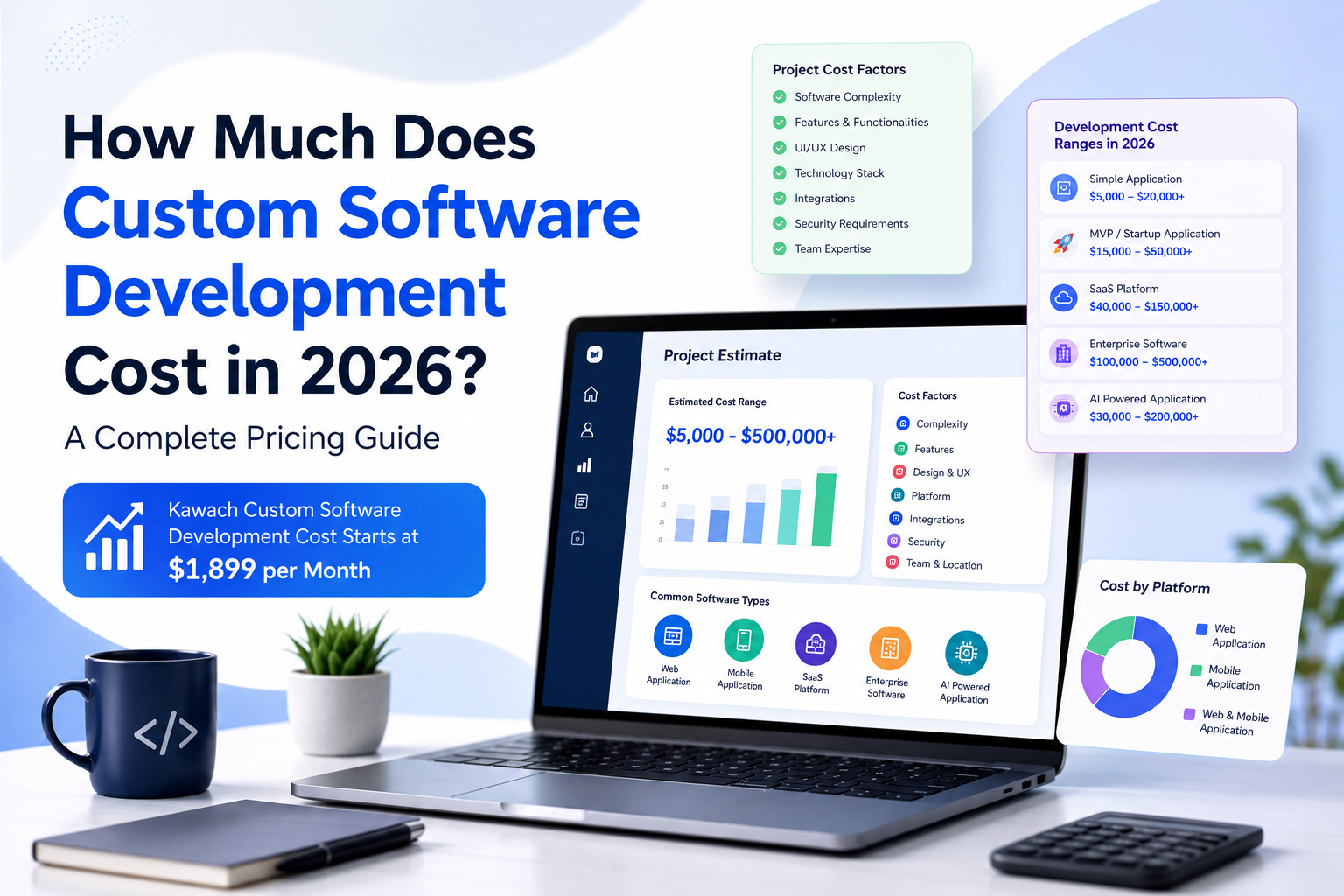
"It depends" is an honest answer to "how much does custom software development cost?" — but it's not a useful one on its own. Anyone who quotes you a firm number before understanding your requirements is guessing. What follows is the actual framework: the factors that move cost up or down, rough reference ranges by project type, and how engagement model affects the number.
What Actually Drives Custom Software Development Cost
The same project idea can cost very different amounts depending on these factors:
- Number of features — more distinct features means more design, development and testing time.
- Overall complexity — a simple CRUD app costs far less than a system with complex business logic, workflows or real-time processing.
- UI/UX requirements — a highly polished, custom-designed interface takes longer than a functional, template-based one.
- Third-party integrations — every payment gateway, CRM, ERP or external API you connect to adds integration and testing work.
- Number of users — a tool for 20 internal staff has very different scaling requirements than a platform for 50,000 public users.
- Security requirements — compliance needs (healthcare, financial, or otherwise) add design and testing overhead.
- Cloud infrastructure needs — how much infrastructure setup, monitoring and DevOps work the project needs.
- Mobile and/or web requirements — building for one platform costs less than building and maintaining both.
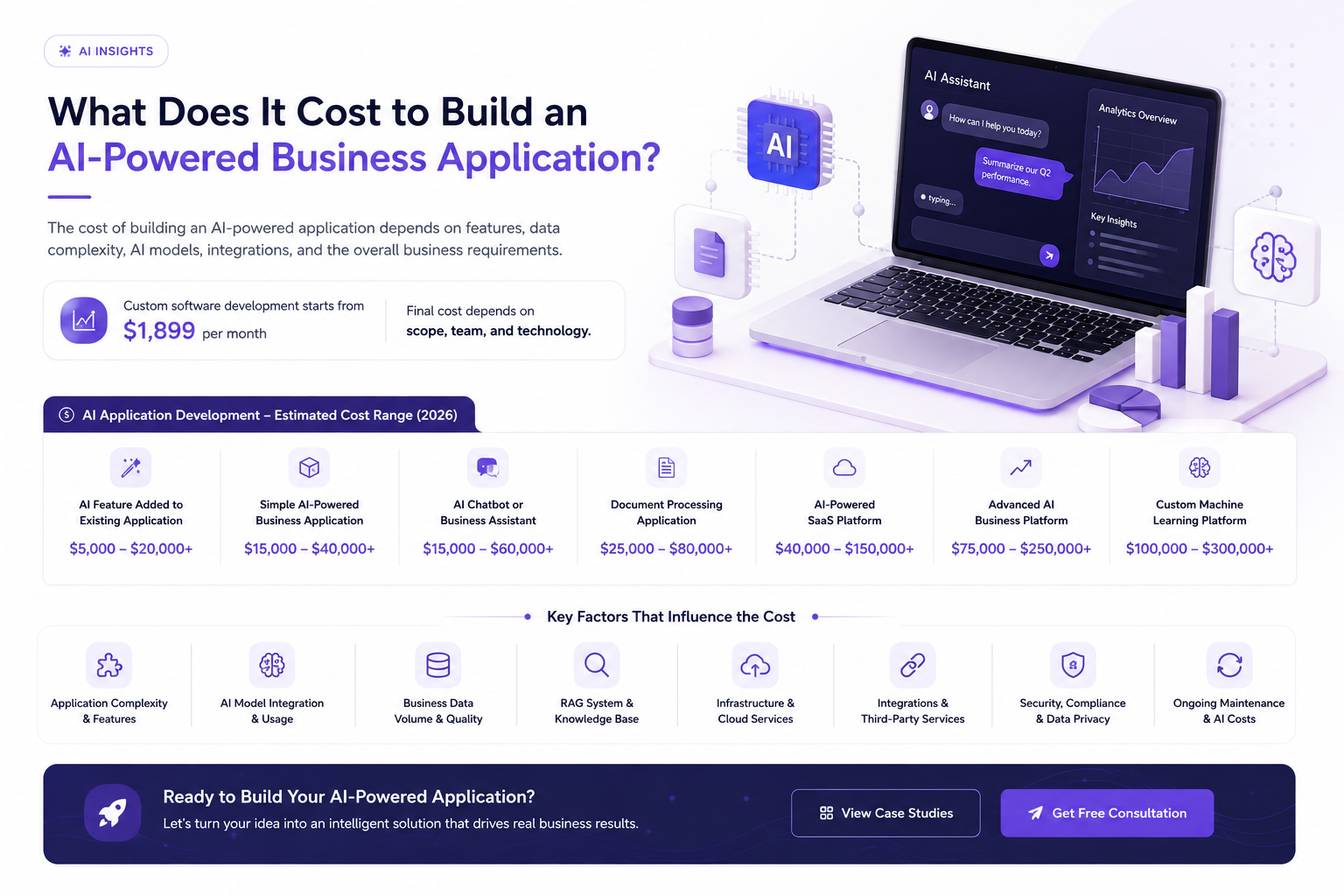
- AI requirements — AI-powered features add data preparation, model integration and testing work on top of the base application.
- Third-party APIs — the number and complexity of external APIs your software needs to talk to.
- Ongoing maintenance requirements — a one-off internal tool has different long-term cost than a product you'll actively grow for years.
Rough Reference Ranges (Not a Quote)
These are reference points, not quotes — every project is scoped individually once we understand your actual requirements:
- Focused MVP: typically starts in the low five figures. This covers a lean version of your product with the core features needed to validate the idea with real users.
- Mid-sized web or mobile application: usually falls in the mid five figures. This covers a more complete product with several integrations and a polished UI.
- Full enterprise or AI-powered platform: can run into six figures, reflecting the complexity of multi-department workflows, compliance requirements, and AI/ML components.
Timeline moves with cost: a focused MVP typically takes a few months, while a more complex platform with significant integrations takes considerably longer.
How Engagement Model Affects Cost
The same project can be structured a few different ways, and the model affects both cost predictability and flexibility:
- Fixed Price Project — best for clearly defined requirements. You get cost certainty, but scope changes require a formal change request.
- Dedicated Development Team — best for ongoing product development where requirements will keep evolving. Costs scale with team size and duration, with high flexibility to adjust priorities.
- Time & Material — best for work where requirements are still being discovered. You pay for actual hours worked, with the flexibility to reorder priorities sprint to sprint.
How to Control Cost Without Cutting Corners
The most reliable way to manage custom software development cost isn't finding a cheaper vendor — it's controlling scope deliberately:
- MVP-first development — build the smallest version that delivers real value first, then expand based on actual usage rather than assumptions.
- Phased development — break a larger project into phases (core platform, then automation and integrations, then advanced features) instead of building everything up front.
- Reusable components and proven architecture — avoid reinventing solved problems, which keeps both development time and long-term maintenance cost down.
This is the same MVP-first, phased approach we use on every custom software development engagement — it's how a project stays affordable without cutting corners on security or quality.
Get an Actual Number
Reference ranges are useful for budgeting conversations, but they're not a quote. The only way to get a real number is a short discovery conversation about what you're actually trying to build — which is what a free consultation is for.
Be the first to comment.